The Maintenance Habits Every Cyclist Should Actually Keep
Practical, no-nonsense bike care tips covering chain, tires, brakes, and the small habits that keep your ride smooth.
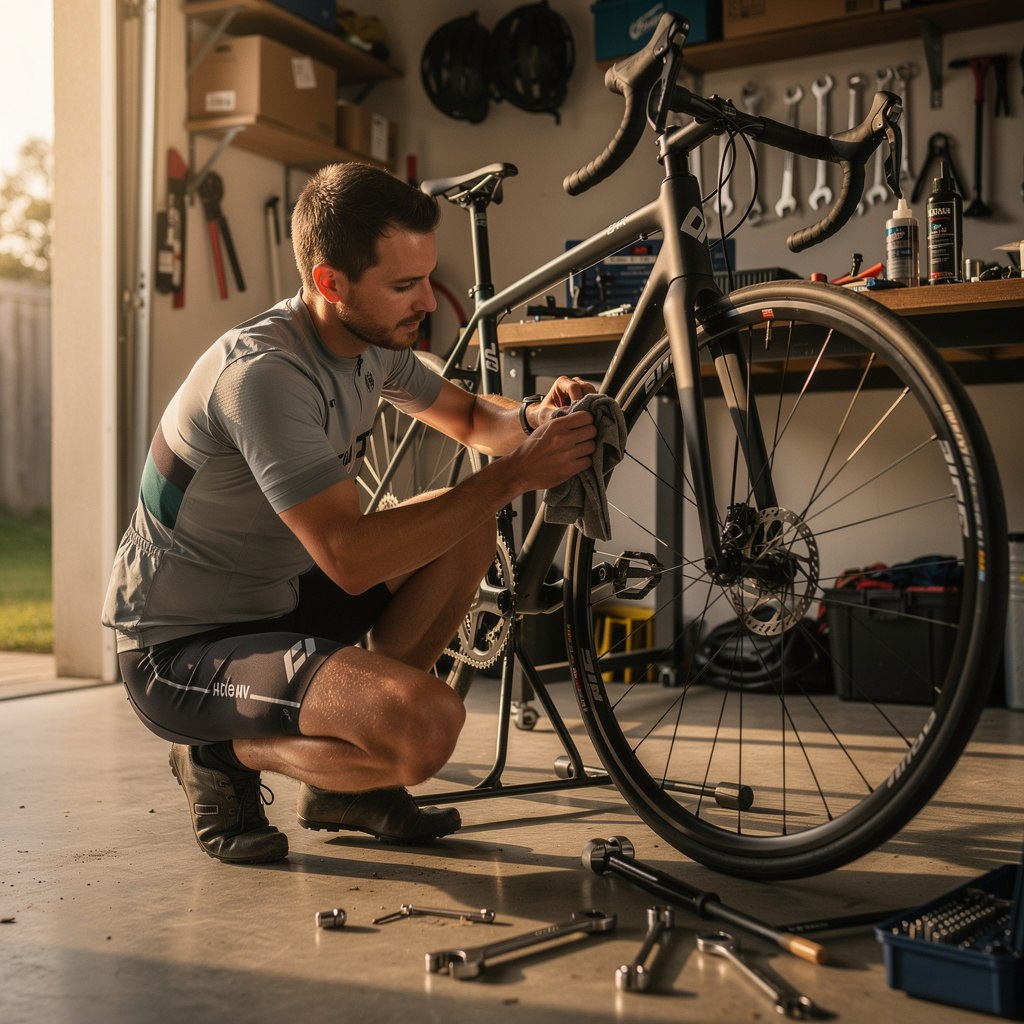
Most bikes don't fail dramatically. They just get quietly worse — a chain that skips under load, brakes that grab unevenly, a rattle that wasn't there last month. The fix usually isn't a trip to the shop. It's ten minutes with a rag and the right habits repeated often enough that they become automatic.
Clean and lube the chain before it squeaks
A dry, gritty chain wears out your cassette and derailleur pulleys faster than almost anything else. Wipe it down with a rag every week or two if you ride regularly, especially after wet rides where road grime turns into a paste.
Use a degreaser only when the chain looks black and sticky, not every time — over-cleaning strips lubricant you'll just have to reapply. After wiping, run a drop of lube on each link, spin the pedals backward a few times, then wipe off the excess. Excess lube attracts dust, which turns into the same grit you were trying to avoid.
Check tire pressure before you check anything else
Low tire pressure is the single most common reason a bike feels sluggish or unstable in corners. Road tires typically want somewhere between 80 and 100 psi, gravel and hybrid tires sit lower, around 35 to 50 psi, and mountain bike tires often run 25 to 35 psi depending on terrain and rider weight.
A floor pump with a gauge takes fifteen seconds and removes the guesswork. Tires lose a few psi naturally over a week or two even without a puncture, so checking before every ride — not just when something feels off — catches slow leaks early.
While you're down there, glance at the tread and sidewalls for cuts, embedded glass, or bulges. A small cut caught now is a patch; ignored, it's a blowout on a descent.
Listen to your brakes, not just your legs
Brake pads wear unevenly and quietly. Rim brake pads usually last a season or two of regular riding, less if you ride in wet or gritty conditions. Disc brake pads vary more, but a grinding or metallic sound means the pad material is gone and you're braking on metal against metal — stop riding and replace them immediately.
Squeaking that isn't grinding is often just glazed pads or a dirty rim or rotor, fixable with a light sanding of the pad surface or a wipe with isopropyl alcohol on the braking surface. Check lever travel too: if the lever pulls nearly to the handlebar before engaging, cables or hydraulic lines need attention.
Keep the drivetrain and bolts snug, not just clean
A loose bolt is easy to ignore until it isn't. Once a month, run a hand over the stem, seatpost clamp, and pedal cranks to feel for play. A torque wrench isn't essential for casual maintenance, but it prevents overtightening carbon components, which crack under too much clamping force.
Shifting that hesitates or skips under pressure is frequently a cable tension issue, not a broken derailleur. Most bikes have a small barrel adjuster near the derailleur that lets you fine-tune this without tools beyond your fingers. Turning it a quarter turn at a time while pedaling in a stand — or having a friend hold the bike up — often solves the problem in under five minutes.
Store it somewhere that doesn't work against you
A bike left outside in direct sun and rain ages faster than one kept indoors, even a cheap one. UV exposure dries out tire rubber and cracks brake hoods over a season or two. Damp storage rusts chains and cables from the inside, where you can't see it until it snaps.
If indoor storage isn't an option, a simple cover reduces most of the damage. Wiping down the frame and drivetrain after a wet ride, rather than letting it dry with mud still on, takes two minutes and prevents most of the corrosion that builds up over a winter.
None of this requires a workshop or specialized tools beyond a pump, a set of Allen keys, and a rag. The bikes that last years without major repairs usually aren't the expensive ones — they're the ones somebody paid attention to every week instead of once a year.