Why Cyclists Need Strength Training Off the Bike
Learn which off-bike exercises actually make you faster and how to fit them into a cycling training week.
Most cyclists spend every free hour on the bike and skip the gym entirely. That approach builds endurance, but it leaves a gap: raw power, joint stability, and the muscle balance that keeps injuries away over a long season.
Why Cycling Alone Isn't Enough
Pedaling works your quads and calves hard, but it barely touches your glutes, hamstrings, or upper body. Over months of riding, this imbalance shows up as lower back pain on long rides or a weak sprint when you need one.
A cyclist who adds two strength sessions a week typically notices better climbing power within six to eight weeks. The gain comes from recruiting muscle fibers that pedaling alone never fully activates.
Strength work also protects your knees. Stronger hips and glutes reduce the sideways knee movement that causes tracking pain after 3,000+ kilometers a season.
The Core Lifts Every Cyclist Should Do
You don't need a bodybuilder's program. Five exercises cover almost everything a rider needs.
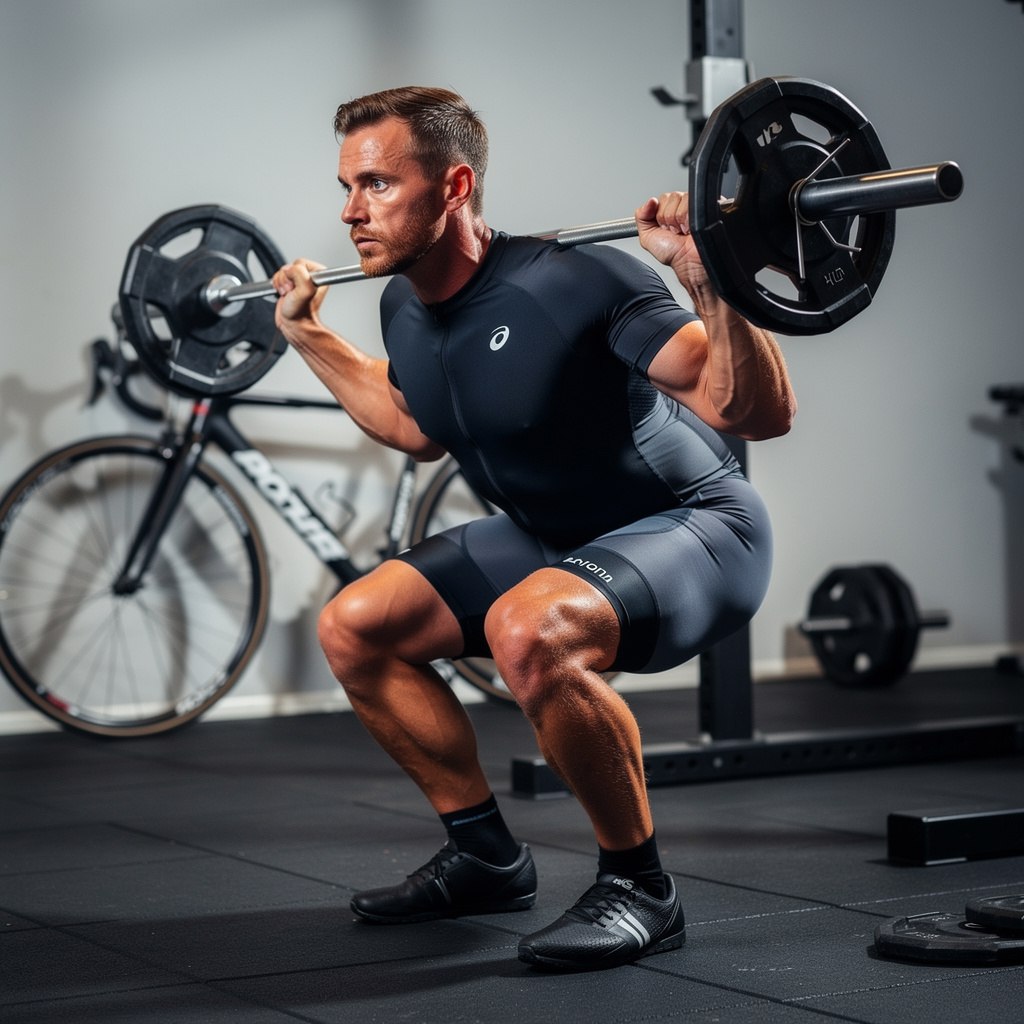
Squats build the same hip and knee extension pattern used in pedaling, but under heavier load than any climb will give you. Start with 3 sets of 6-8 reps at a weight that feels challenging by the last two reps.
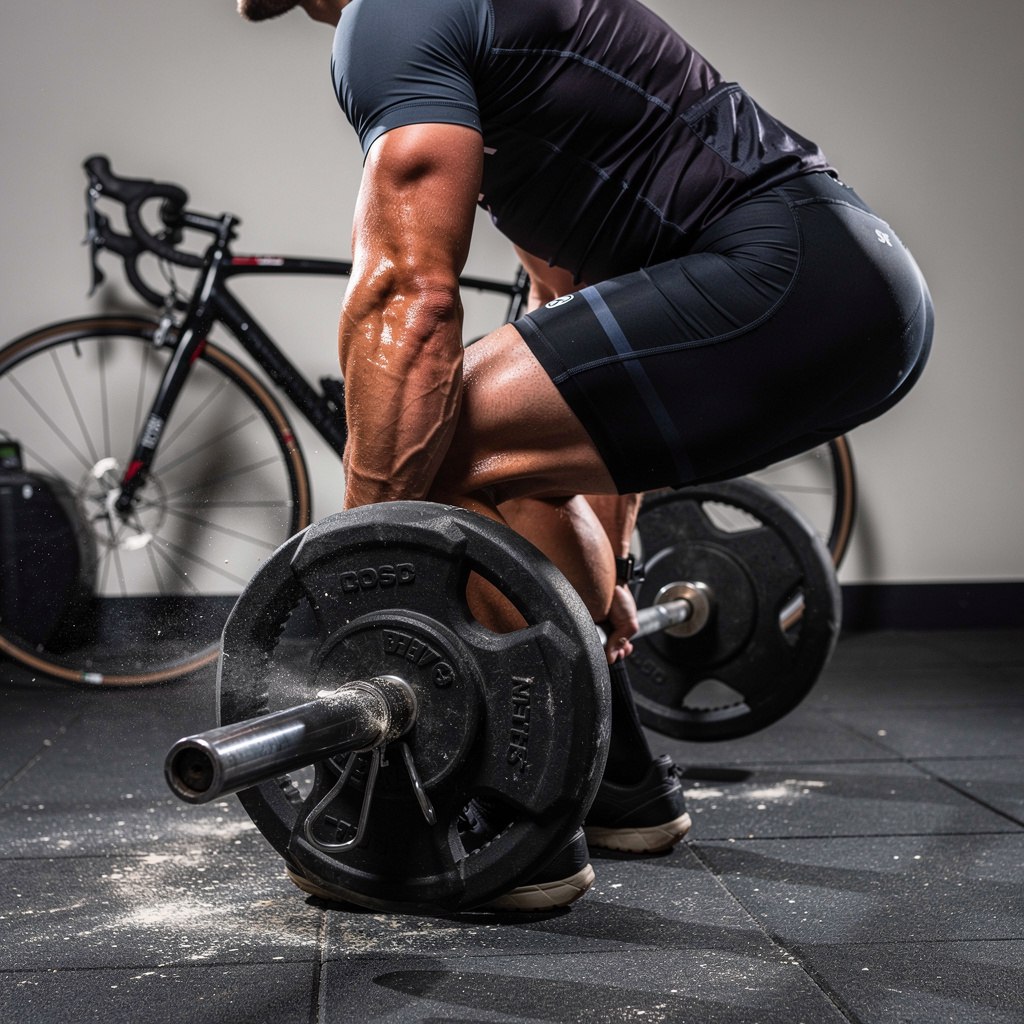
Romanian deadlifts target hamstrings and lower back, the two areas cycling neglects most. Three sets of 8 reps, controlled tempo, work better here than heavy singles.
Single-leg step-ups mimic the one-sided force of pedaling and expose left-right imbalances. Use a box around knee height and aim for 3 sets of 10 per leg.
Planks and side planks build the core stability that keeps your torso still while your legs do the work. Thirty to sixty seconds per set is enough if your form stays clean.
Overhead presses or push-ups round things out by strengthening shoulders and arms, which take a beating on rough roads or long descents.
Building a Weekly Routine
Two sessions a week is the sweet spot for most riders. Three works only if your cycling volume is low that week.
A simple split: one full-body strength day early in the week, paired with a shorter, lighter session two or three days later. Keep each workout under 45 minutes so it doesn't eat into riding time or recovery.
Schedule strength days on the same day as easy or rest rides, never the day before a hard interval session or a long group ride. Legs need to feel fresh for both types of training to actually work.
Common Mistakes to Avoid
Lifting too light is the most frequent error. Cyclists worry about getting "too bulky," but building real strength requires working close to failure on the last rep, not just going through the motions with empty-feeling sets.
Skipping the lower back and core is another trap. Riders focus on legs because that's what they see working on the bike, then wonder why their back aches after a century ride.
Starting strength training right before a big event is also a mistake. New muscle soreness a week before a race will hurt performance more than it helps. Build your strength base in the off-season or early base-building phase, then taper it down as race day approaches.
When to Add Strength Work in Your Season
The off-season, typically the three to four months before your main goal events, is the best window for heavier lifting. This is when you can push weights up without worrying about leg fatigue affecting a key ride.
Once race season starts, shift to maintenance mode: one session a week, lighter weights, fewer sets. The goal shifts from building strength to simply keeping what you've already gained.
In the final two weeks before a major event, drop strength training altogether. Let your legs feel light and fresh instead of carrying gym fatigue into race day.