Dressing for the City Ride: Style Meets Function
A practical guide to urban cycling clothing and accessories that balance comfort, visibility, and everyday style.
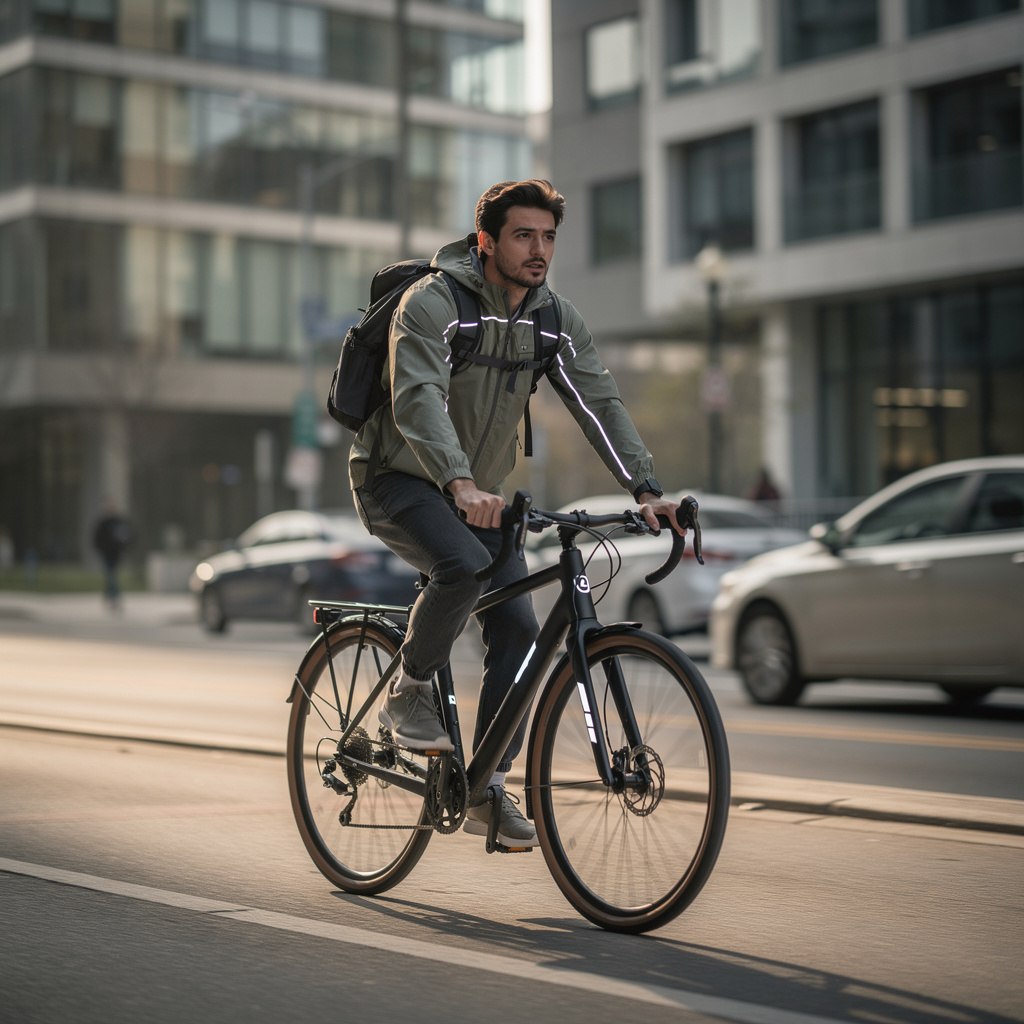
A commute isn't a race, so the first rule of urban cycling style is simple: you don't need a jersey to ride to work. Most city riders cover under five miles at a relaxed pace, which means regular clothes handle the job fine. The real skill lies in choosing pieces that survive a ride without falling apart or making you sweat through a meeting.
Fabrics That Move With You
Stretch denim has replaced classic jeans for many riders because it flexes at the knee without tearing at the seams. Brands cutting jeans with 2-3% elastane let you pedal without that stiff tug across the thigh.
Wool and wool-blend layers show up more often than cotton for a reason: wool resists odor after a sweaty ride and regulates temperature better in changing weather. A merino base layer under a jacket works from 40°F mornings to 65°F afternoons without needing a wardrobe change.
Avoid pure cotton hoodies for anything beyond a short flat ride. Cotton holds moisture, dries slowly, and turns cold and heavy the moment you stop moving in cool weather.
Footwear and Pant Management
Flat pedals paired with sneakers remain the default for city riding, and for good reason: you can walk into a café or office without changing shoes. Look for soles with some grip texture rather than smooth skate-shoe bottoms, since wet pedals get slippery fast.
Wide-leg pants and loose trousers need a solution for chain contact. A simple ankle strap or a rubber band does the job, but more riders now buy pants with a built-in snap cuff or a tapered leg that narrows below the knee. Some cargo pants brands add a hidden loop specifically for rolling up the right leg.
Skirts and dresses work better than most people expect, especially with a slip underneath for coverage and a saddle that doesn't ride up fabric. Below-the-knee lengths cause fewer issues than short hemlines on a bike with a higher seat.
Visibility Without Looking Like a Traffic Cone
Reflective details have moved past the neon-vest phase. Several outerwear lines now weave reflective thread into the fabric pattern itself, so a jacket looks charcoal gray in daylight but throws back headlight beams at night.
Ankle bands with reflective strips solve a specific problem: drivers spot pedaling motion faster than a static reflective patch on a backpack. A five-dollar velcro band around each ankle adds visibility exactly where a driver's eye tracks movement.
Backpacks and messenger bags with a reflective panel on the rear face cover the angle a rear light might miss. Pick one with a slot for a blinking light too, since a moving light beats a static reflector in low visibility.
Weather Layers That Actually Get Worn
A rain shell that stays crumpled in a bag gets left at home more often than one that clips onto a rack or fits in a jacket pocket. Packable shells under 300 grams get used; bulky rain jackets often don't.
Gloves matter more than most riders expect below 50°F. Thin liner gloves under regular mittens handle brief cold spells, while dedicated cycling gloves with a grippy palm help on wet brake levers during a downpour.
A buff or neck gaiter does triple duty as a scarf, an ear cover, and a face shield against wind. It packs into a pocket and costs less than a dedicated cycling accessory built for the same job.
Accessories Riders Actually Use Daily
A bell might feel old-fashioned, but it beats shouting at pedestrians who wear earbuds. Many city cyclists mount one within thumb's reach of the brake lever rather than buried under a handlebar bag.
Fingerless gloves solve a real problem for riders who check their phone at every light: full coverage gloves make touchscreens useless, so a fingerless pair keeps hands warm while leaving fingertips free.
A small saddle bag or top-tube bag holds a spare tube, a multitool, and a phone without needing a backpack for a short trip. Riders who commute daily often skip the backpack entirely once they add this kind of bag to the bike itself.
Style on a city bike comes down to picking pieces that solve a specific problem — chain contact, wet weather, low light — without turning your commute into a costume change. The best urban cycling wardrobe looks like it wasn't built for cycling at all.